A Guide to Sofa Deep Cleaning for Residential Homes
A guide to sofa deep cleaning to keep your home clean, comfortable, and allergen-free.
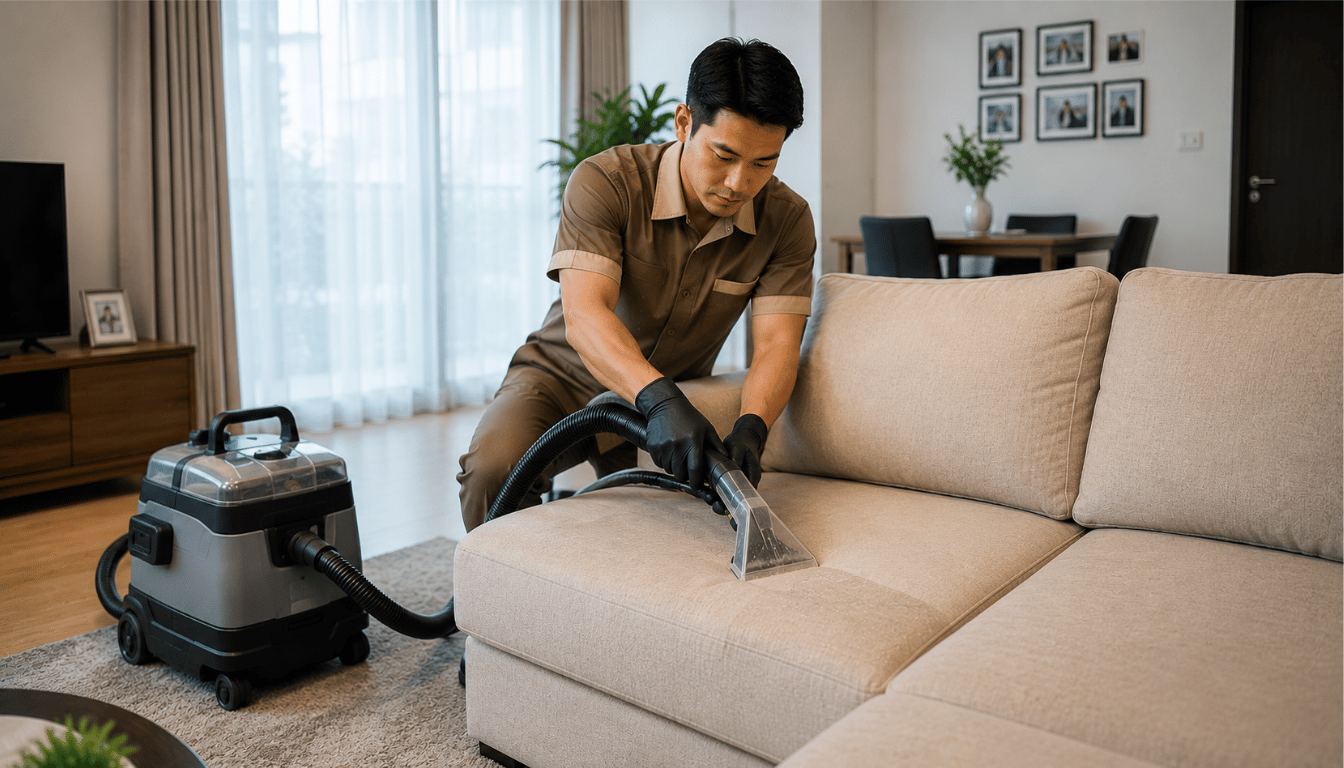
Sofa deep cleaning is needed periodically because both the surface and inner layers of a sofa absorb dust, sweat, body oil, and food or drink spills that can't be lifted with vacuuming or a surface wipe alone. For residential homes and apartments, a rarely-treated sofa can become a source of odor, allergens, and stains that get harder to remove over time — often without anyone noticing until the problem is already well established.
1. Why Sofas Need Deep Cleaning, Not Just a Surface Wipe
A sofa gets used almost every day for sitting, relaxing, and sometimes a quick nap, so its surface is constantly exposed to sweat, body oil, and dead skin cells. That combination, plus airborne dust settling on the fabric, gradually works its way into the fabric fibers and the foam layer underneath — an area a regular surface vacuum never reaches [Insert reference to a study/source on allergens in upholstered furniture], even while the sofa still looks tidy from the outside.
Beyond dust and sweat, a household sofa is also a common site for food, drink spills, or even pet accidents. If a stain isn't treated promptly, liquid can soak deep into the foam layer and become a lingering odor source even after the surface looks dry and clean again — and by that point, the smell is usually much harder to trace back to its actual source.
2. Sofa Material Types and How They Affect Cleaning Method
Sofa deep-cleaning method can't be applied the same way across every upholstery material. A few general categories worth understanding before cleaning include:
- Cotton or linen fabric — generally more tolerant of water-based wet cleaning, but still needs a spot test on a hidden area first to confirm the color won't run, particularly on brightly colored or patterned sofas that show discoloration more visibly.
- Microfiber fabric — tends to be easy to clean and dries quickly, but is prone to leaving water marks if drying isn't handled properly, so it needs an even drying technique across the whole surface to avoid a blotchy finish.
- Genuine or synthetic leather — needs a leather-specific cleaning agent rather than a regular detergent-based solution, since the wrong product can crack, dull, or strip the protective coating off the leather surface, shortening its lifespan considerably.
- Velvet or heavily textured fabric — needs extra attention to fiber direction while brushing, so the original texture isn't damaged, since brushing against the grain can leave visible streak marks on the surface that are hard to correct afterward.
Why Material Testing Matters Before a Deep Clean
Before a full clean, it's important to test how the sofa's material reacts to a cleaning solution on a small, hidden spot, such as under a cushion or on the back panel. This step helps avoid permanent damage like discoloration or a texture change that would leave the sofa looking worse than before the cleaning ever started.
Special Considerations for Homes with Pets or Family Allergies
Households with pets generally face an added challenge: pet hair that works deep into sofa fibers and doesn't always lift with a regular vacuum. Pet saliva or scratch marks can also leave stains and odors that need more intensive treatment. For families with a member sensitive to dust or pet dander, regular sofa deep cleaning can help reduce allergen exposure in the living room, the space where they typically spend the most time relaxing together.
3. How TUM Clean Handles Sofa Deep Cleaning in Bogor
Method and Process Stages
TUM Clean, operated under the legal entity PT. Tunggal Utama Makmur and based in Sentul, Kecamatan Babakan Madang, Kabupaten Bogor, handles sofa deep cleaning for residential clients across Bogor, Sentul, Ciawi, Cibinong, Cibubur, and Depok, including clients in the residential segment such as Darmawan Park. The process generally covers:
- Material and condition identification to determine the right cleaning method and solution, including any stubborn stain areas that need special attention.
- Thorough vacuuming across the whole surface, cushion gaps, and crevices to lift dust and dry particles before the wet process starts.
- Stain pre-treatment using a solution matched to the stain type and sofa material, left to sit briefly before extraction.
- Extraction and drying using a dedicated upholstery machine to remove dirt and the cleaning solution, followed by a drying process so the sofa can be used again as soon as possible.
Deep-cleaning schedules are matched to how heavily each sofa is used — a frequently-used family room sofa generally needs more frequent care than a rarely-used living room sofa, and that cadence is often adjusted after the first visit once actual wear patterns become clear.
Common Mistakes in Home Sofa Care
Some frequent mistakes that cause a sofa to wear out faster or stay looking dirty include:
- Using a cleaning agent not suited to the fabric type, which risks leaving new stains or damaging the fabric's protective coating, sometimes permanently.
- Scrubbing a stain too hard, which spreads it further instead of lifting it out of the fabric fibers, often making the affected area larger than the original spill.
- Leaving the sofa wet for too long after cleaning, creating moisture that risks a musty smell or mold growth in the foam layer.
- Never deep cleaning at all, relying only on surface vacuuming, so dirt in the inner layers keeps accumulating unnoticed for years until it starts affecting the fabric's appearance and smell.
4. Building a Sofa Maintenance Schedule Matched to Your Home's Needs
An ideal sofa deep-cleaning schedule should factor in several elements below, rather than applying the same schedule to every sofa:
- Daily usage level, including whether the sofa is frequently used by children or pets, both of which tend to accelerate dirt buildup.
- Upholstery material type, since some materials absorb dirt more readily than others and require different cleaning intervals as a result.
- Sofa location, such as a shared apartment common area or a multi-unit building's lobby used by many residents throughout the day.
- A history of spills or stains, which signals areas that need more attention and a possible adjustment to the regular schedule.
As a general illustration, a family room sofa used daily may need deep cleaning every few months, while a rarely-used living room sofa might only need it once a year [Insert specific frequency recommendation based on a site survey], since usage patterns can vary widely even between two seemingly similar households. This approach helps homeowners and apartment managers alike allocate maintenance budget more precisely, rather than scheduling every sofa uniformly. To get a sofa deep-cleaning schedule matched to your home, please Contact Us, or read Articles on specialist and project cleaning.
FAQ
Quick and Practical Consultation
Address
Darmawan Park, Jl. Babakan Madang No.99, Sentul, Kec. Babakan Madang, Kabupaten Bogor, Jawa Barat 16810
Google Maps