Deep Cleaning High-Traffic Areas: Lobbies and Entrances
A guide to deep cleaning lobbies and entrances so your building always looks polished and professional.
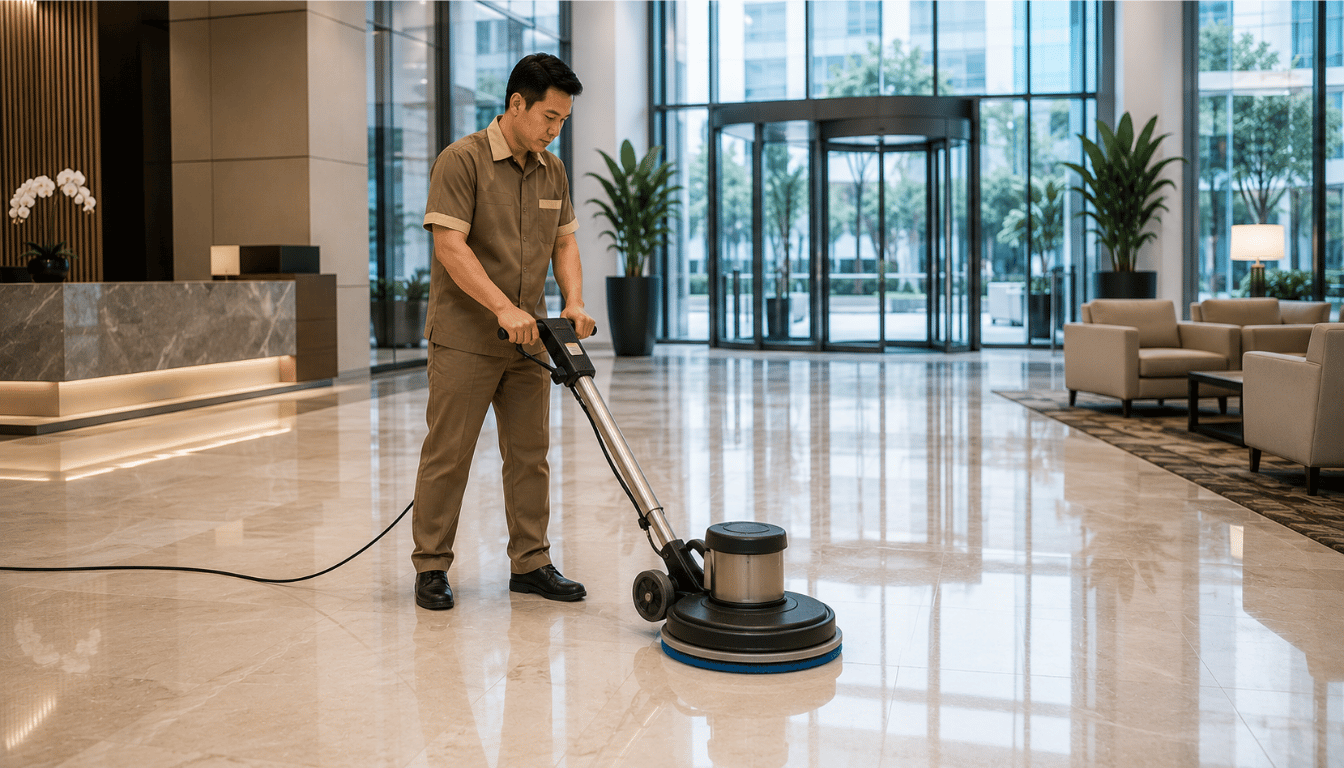
Deep cleaning high-traffic areas like lobbies and entrances needs to happen more often than in regular work areas, because these surfaces take on far more dirt, dust, and physical wear every single day. Lobbies and entrances are also the first thing guests, clients, and employees see, so their condition directly shapes the first impression of a building's professionalism — often before a single word is exchanged with anyone inside.
1. Why Lobbies and Entrances Need Special Attention
Unlike an internal work area with a relatively fixed set of users throughout the day, a lobby and entrance are crossed by nearly everyone entering or leaving the building — employees, guests, couriers, and the occasional walk-in visitor. Every person passing through tracks in dust, grit, rainwater, or outdoor dirt stuck to their footwear.
This high traffic volume means the flooring, entrance mats, and glass surfaces in a lobby get dirty far faster than a typical work area. Without maintenance matched to that intensity, the area meant to represent the building at its best ends up being the spot that looks worn down first [Insert reference to a study/source on how public-area cleanliness affects visitor perception], often within the same week that the rest of the building still looks freshly cleaned.
2. Key Elements to Address in Lobby Deep Cleaning
Deep cleaning a high-traffic area covers several interrelated elements, not just routine mopping:
- Flooring and hard surfaces — marble, granite, or tile flooring in a lobby needs periodic polishing and stain removal so it doesn't look dull or scuffed from constant foot traffic. On marble in particular, grit that isn't cleared regularly can leave permanent scratches on the surface layer.
- Entrance mats — the mat at an entrance absorbs outdoor dirt before it spreads to the rest of the building, so it needs washing more often than carpet in an internal work area. A mat that's already saturated with dirt stops functioning as a filter and starts shedding that dirt back onto the surrounding floor, which can make cleaning the mat feel counterproductive if it isn't washed on schedule.
- Glass and door surfaces — glass doors and large lobby windows are prone to fingerprints and handprints, which, left untreated, make the area look unkempt even if the floor is spotless. Frequently-touched doors, like a main entrance, typically need cleaning more often than the static windows around them, particularly during busy arrival and departure hours.
- Furniture and guest seating areas — sofas, waiting chairs, and the reception desk need a thorough clean, not just a surface wipe, since guests touch and sit in this area directly, often for a non-trivial amount of time while waiting.
Daily Maintenance vs. Deep Cleaning in Lobby Areas
Daily maintenance — sweeping, mopping, wiping glass — keeps the area looking clean day to day, but doesn't reach dirt that's already worked into the pores of the flooring or the fibers of the entrance mat. Deep cleaning uses more intensive methods and materials, such as floor polishing or carpet extraction, to remove what routine cleaning can't lift, which is why the two approaches work best as complements rather than substitutes for one another.
Preventive Measures Between Deep-Cleaning Cycles
Beyond the periodic deep-cleaning schedule, a few simple preventive measures help slow down dirt buildup in a lobby. Placing a sufficiently long entrance mat on both sides of the door helps absorb more dirt before it reaches the main flooring. Adding wet-floor signage during the rainy season also helps reduce slip risk while reminding staff to check the area more frequently on rainy days, when the volume of tracked-in water and mud can rise sharply within a single shift.
3. How TUM Clean Handles High-Traffic Area Deep Cleaning
Method and Process Stages
TUM Clean, operated under the legal entity PT. Tunggal Utama Makmur and based in Sentul, Kecamatan Babakan Madang, Kabupaten Bogor, handles deep cleaning for lobbies, entrances, and other high-traffic areas for commercial clients across Bogor, Sentul, Ciawi, Cibinong, Cibubur, and Depok. The process generally covers:
- Area condition assessment to determine flooring material type, level of dullness, and any stubborn stains that need special attention.
- Floor cleaning and polishing using a polishing machine suited to the material — marble, granite, vinyl, or tile.
- Entrance mat extraction to lift dirt that's already worked into the lower fiber layer, not just a surface vacuum.
- Glass and waiting-area furniture cleaning as the final stage, to make sure the whole lobby looks consistently well-kept.
Deep-cleaning frequency is matched to each building's traffic volume — an office building with many tenants generally needs a more frequent schedule than a building with restricted access, and that schedule is often refined after the first couple of visits once real wear patterns become visible.
Common Mistakes in Lobby and Entrance Maintenance
Some frequent mistakes found in buildings without a structured maintenance schedule for this area include:
- Applying the same schedule to the lobby as other work areas, even though traffic volume differs significantly and should call for a different, tighter maintenance frequency.
- Cleaning only the floor while ignoring the entrance mat, even though the mat is the primary filter catching outdoor dirt before it spreads elsewhere.
- Only scheduling deep cleaning after a guest complaint, making maintenance reactive and typically more expensive than a preventive schedule.
- Not accounting for the rainy season, even though a lobby needs extra attention during rainy months due to the extra water and mud tracked in.
4. Building a Lobby Maintenance Schedule Matched to a Building's Traffic Volume
An ideal deep-cleaning schedule for lobbies and entrances should factor in several elements:
- The number of people passing through daily, including peak hours like morning arrival and end-of-day departure.
- Flooring material type, since marble and granite require different handling than vinyl or tile.
- Season and weather, since rainy season typically increases entrance mat and floor maintenance needs.
- Upcoming events or important visits, such as a client audit or investor visit, which call for the lobby to be in its best condition.
As a general illustration, a very high-traffic building may need lobby deep cleaning every few weeks, while a building with more restricted access might only need it every one to two months [Insert specific frequency recommendation based on a site survey], since traffic patterns can vary widely even between buildings of similar size in the same area. To get a schedule matched to your building's traffic volume, please Contact Us, or read Articles on specialist and project cleaning.
FAQ
Quick and Practical Consultation
Address
Darmawan Park, Jl. Babakan Madang No.99, Sentul, Kec. Babakan Madang, Kabupaten Bogor, Jawa Barat 16810
Google Maps